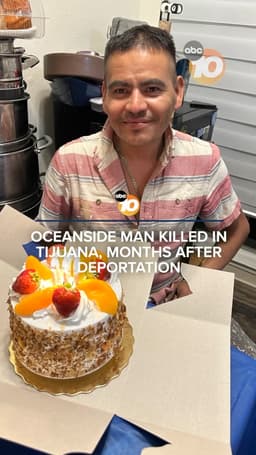
Oceanside man killed in Tijuana months after ICE deportation


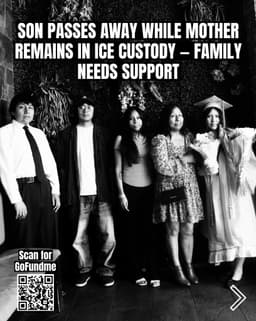
Rigo Mendoza's wife was detained by ICE agents, and the following day his 15-year-old son Kevin, who had been diagnosed with cancer in November, died. Mendoza recalled his son's final words expressing worry for his father's safety rather than his own illness. Following his wife's detention and his son's death, Mendoza decided to self-deport to Mexico with his family.


On August 12, 2026, federal authorities conducted Operation Guardian Angel, a coordinated enforcement action across seven Southern California counties (Los Angeles, Orange, Riverside, San Bernardino, San Luis Obispo, Santa Barbara, and Ventura), resulting in 362 arrests of previously deported migrants. The operation targeted foreign nationals who had been arrested by local police on criminal charges and who had prior deportations. Among those arrested were José Cristian Saravia-Sánchez, 31, who was removed from the United States in 2013 and illegally returned, and was accused of shooting and killing an Inglewood man during a catalytic converter theft in 2025; Daniel Garcia, a Mexican national deported for illegal entry who paid $10,000 to a smuggler to re-enter and faced domestic battery charges; Raul Aranda Gutierrez, arrested for reckless driving in a car wreck that injured two women; Jaime Rodríguez Ladesma, 70, deported in December 2023 after a conviction for lewd acts with a child; Héctor Bueno-Moreno, 55, deported in September 2001 and January 2020, with a 1995 rape conviction in Kern County; and Lauro Alberto Rivas, a Mexican national with a criminal record including weapons offenses, grand theft, and drunk driving convictions, who after serving eight months in jail for carrying a gun in public expressed remorse for his actions, stating "I regret what I did. I understand I make mistakes. I want to be sent home now. I want to see my family." Federal prosecutors filed new federal criminal charges against these individuals, allowing ICE to assume custody before they could be released from county jails under California sanctuary policies.


The United States has deported hundreds of unaccompanied Mexican children on flights to southern Mexico cities including Tapachula, Villahermosa, and Mérida, where human rights organizations confirm more than 350 cases. Many children lack resources to return home safely and have become stranded in unfamiliar cities with inadequate local support services. Some children have disappeared from shelters, and human rights advocates have received information suggesting possible deaths of at least three children attempting to return to their home communities. The policy, discovered in December 2024, represents a shift from prior practice of rapid deportations at the land border where children received care through Mexico's child welfare system.


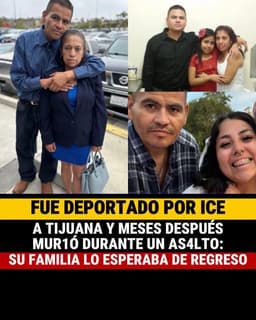
A man was deported by ICE to Tijuana in January 2024 and died during an armed robbery when gunmen shot him in the heart, according to his family. His daughter, Evelyn González, a resident of Oceanside, California, remembered him as a strong man who always fought for his family and taught her to be independent. His family is seeking help to transport his body to his hometown in Mexico for a dignified farewell.


Edwin Jovanny López Cornejo, a 39-year-old Salvadoran national who had lived in the U.S. for nearly 20 years, died August 1, 2026, at University Hospital in Newark following a medical emergency at the Delaney Hall ICE detention facility. He suffered from epilepsy, diabetes, and high blood pressure requiring daily medication, and leaves behind a 12-year-old U.S. citizen daughter, Ashley. ICE arrested him June 18, 2026, in Plainfield, New Jersey, reviving a 2006 deportation order, though his family said he held a valid work permit. His mother, Maria Cornejo, said he called her feeling very ill with numbness in his face and hand after seeing a facility medical provider, and described him as hardworking and a good father, saying, "I lost him to the hands of immigration authorities." The ACLU of New Jersey and his family allege he was denied adequate medical care, which DHS denies, stating he received proper treatment. His death was the second at Delaney Hall since it opened in May 2025, following months of detainee complaints and lawsuits alleging denial of medication, and prompted Governor Mikie Sherrill and Newark Mayor Ras Baraka to call for the facility's closure.


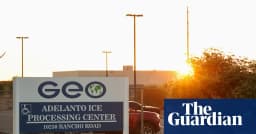
Carlitos Ricardo Parias, detained at the Adelanto ICE facility near Los Angeles, revealed video footage showing a bottle of drinking water apparently contaminated with worm-like creatures or larvae. The footage emerged weeks after a federal judge ordered ICE to ensure 24-hour access to clean drinking water at the facility in response to a class-action lawsuit alleging dangerous conditions including inadequate food, contaminated water, and poor medical care. Parias preserved the contaminated water as evidence after staff distributed it to detained residents.
Martin Martinez-Ballinas, 38, a Mexican national, was transferred to ICE custody on July 22, 2026, after completing a federal prison sentence for illegal reentry at Fort Dix, New Jersey. He faces deportation proceedings for the third time. Martinez-Ballinas was previously deported in 2020 after a 2017 felony conviction in Maryland for a fatal hit-and-run crash involving a U.S. Marine, then unlawfully reentered and was apprehended by U.S. Border Patrol in Texas in 2021, convicted of illegal reentry, and deported again in October 2022. He reentered the United States again without authorization and was apprehended in Maryland in December 2023, subsequently convicted of another unlawful reentry offense.


José Trinidad Rojas Pliego, a Mexican citizen who has lived continuously in the United States since 1998, was detained by ICE agents on July 7, 2026, after witnessing a fatal shooting in Houston. Pliego was a passenger in a work van driven by Lorenzo Salgado Araujo, a 52-year-old homebuilder and father of three who had lived in the U.S. for 35 years and was close to obtaining legal status. ICE agents pursued the vehicle, rammed it, and shot Araujo, who had no criminal record. Pliego, who is in a common-law marriage with a U.S. citizen and has multiple U.S. citizen children and stepchildren, and Araujo's other passenger submitted sworn statements describing the shooting differently from the government's account, stating that agents were not positioned in front of the vehicle and that it had been boxed in when the officer fired. This contradicted DHS's claim that Araujo had "weaponized his vehicle in an attempt to run over an ICE law enforcement officer." After being held at the Montgomery Processing Center for weeks with no criminal history, U.S. District Judge Keith Ellison ordered ICE to release Pliego on July 29, 2026, finding that his mandatory detention without an individualized bond determination violated his Fifth Amendment due process rights. Pliego has applied for a U-visa as a possible crime victim related to the ICE shooting, with the Harris County District Attorney's Office supporting that application.
Marvin Alexander Mejía Alvarado, a Honduran national with family in Memphis, died on July 27, 2026, weeks after being released from ICE detention. A federal judge in Colorado ordered his release on bond at the end of June after determining the government had not presented clear and convincing evidence to justify continued detention. After his release in early July, Mejía wrote to his aunt thanking God for allowing him to leave the detention facility and acknowledging the prayers that gave him strength to endure mistreatment by detention staff. His family reported that following his release, he experienced severe health complications they attribute to his treatment during detention, including lack of access to medications needed for a preexisting medical condition.


Nixon Giovanni Pérez Paz, 43, and his wife Glendy Marisol González de la Cruz, 25, were found bound and shot dead in a sugarcane field in Guatemala weeks after González de la Cruz self-deported to rejoin her husband. Pérez Paz was arrested by ICE agents in an unmarked vehicle near his home in Overland, Missouri in March 2025 while driving to work with his brother; he and his brother were undocumented immigrants who had fled violence and poverty from Central America. González de la Cruz had an active asylum case but worked two manual labor jobs while raising their three young daughters, including a newborn born in June 2025. Fearing detention and separation from her children, she chose to self-deport to be with Pérez Paz in Guatemala. Their 14-month-old daughter was found crying beside her mother's body and showed signs of dehydration; she was taken to a medical center and is recovering. Her brother-in-law is now caring for the three orphaned children.


Priciliano Trejo, a 29-year-old who had lived in the United States since age 3, was arrested in North Carolina in mid-June 2026 and transferred to Stewart Detention Center in Georgia. During his three weeks in ICE custody, Trejo became increasingly ill with leukemia symptoms—coughing up blood, experiencing severe pain, and developing a bruise that would not heal—but was not taken to a hospital until July 13, more than a week after requesting medical care. He fell into a coma two days later, and ICE released custody to his family. Trejo died on July 24, 2026. Advocates say medical neglect contributed to his death at a facility previously cited for deficiencies in suicide prevention and medical care protocols.
Prisciliano Trejo Ricano, a 29-year-old Mexican national who had lived in Durham, North Carolina since age 3, died on July 24 from leukemia while in ICE custody at Stewart Detention Center in Georgia. He was arrested on June 19 and transferred to Stewart, where he began feeling ill on July 6 and requested medical care. According to organizations monitoring his case, ICE did not provide treatment for eight days. He was hospitalized on July 13 and fell into a coma by July 15, at which point ICE transferred his custody to his family. His cousin and father described him as previously in good health, with his father stating he could not understand "how, in such a short time, his condition deteriorated to the point of death." He had just turned 29 on July 10 while detained. Detention Watch Network, Project South, Georgia Latino Alliance for Human Rights, El Refugio, and Carolina Migrant Network called for investigations into his death and documented patterns of medical neglect at Stewart Detention Center, where his death was counted as the 15th or 50th in ICE custody depending on the counting methodology used.


José Chajón-Raxón, a Guatemalan immigrant, was detained by ICE at the Delaney Hall facility in Newark, New Jersey on July 18. The following day, a nurse witnessed him experiencing seizure-like activity and he was hospitalized. DHS said he was released from ICE custody on July 22 but has not disclosed further details, including when he died or whether he left the hospital before his death, citing a policy that ICE is no longer responsible for tracking deaths after release from custody. His death became publicly known after Democratic U.S. Rep. Rob Menendez disclosed it; Menendez said he received conflicting information about the case and conducted an oversight visit to the facility. Chajón-Raxón is the third detainee to die in connection with Delaney Hall.
Jose Trinidad Rojas Pliego and Daniel Tirado Pantoja, both Mexican citizens who had lived in the United States for decades without criminal records, were rear passengers in a van driven by Lorenzo Salgado Araujo when ICE agents fatally shot the driver on July 7, 2026, in Houston. Both men were detained by ICE following the incident. In their federal court statements, both witnesses contradicted the government's account of the shooting. Rojas Pliego, who is in a common-law marriage with a U.S. citizen and has seven U.S. citizen children and stepchildren, described unmarked ICE vehicles cornering the van and stated it was "impossible" that officers were in danger after the driver stopped. He reported being pulled from the vehicle, handcuffed, and thrown to the ground by the officer who fired the shots. Tirado Pantoja, described by his employer as a devoted family man with integrity and dedication, stated that agents were positioned only to the sides of the van and that Salgado Araujo had come to a full stop before being shot. Both men filed habeas corpus petitions challenging their confinement and applied for U visas for crime victims who assist law enforcement. On July 21, 2026, U.S. District Judge Keith P. Ellison ordered the Department of Homeland Security not to deport either witness or transfer them outside the Southern District of Texas without court permission while their habeas petitions are pending.


Joan Sebastian Durán Guerrero, a 25-year-old Colombian national, was fatally shot by ICE officer David Brouillette during a traffic stop in Biddeford, Maine on July 13-14, 2026. Durán Guerrero was lawfully present in the U.S. with work authorization and a Social Security number, working as a food delivery and custodian driver while living with his partner Karolina Rojas and their 3-year-old daughter. He was not the target of the ICE enforcement operation; agents were surveilling a nearby address for someone with a final order of removal. When ICE attempted to stop his vehicle as it left the area, Durán Guerrero's vehicle attempted to leave and the officer fired five times, striking him in the head. His vehicle was then rammed by an ICE vehicle, and he was pronounced dead at the scene. Neighbors and community members described him as quiet, dedicated, a good father, and a valued community member. DHS Secretary Markwayne Mullin initially ordered a pause in traffic stops following the shooting, but President Trump reversed the decision. The FBI declined to conduct a civil rights investigation, though the officer was later revealed to have a history of abusive and violent behavior and possible inadequate vetting. The shooting occurred six days after another fatal ICE shooting in Houston and prompted protests in Biddeford and calls from Maine officials including Governor Janet Mills and Congresswoman Chellie Pingree for thorough investigation. Durán Guerrero's family is seeking to send his body to Colombia for burial, with the Colombian embassy providing assistance.


Jesús Manuel Arenas-Silva, a 45-year-old Venezuelan man, died on July 13, 2026, during a bus transfer between ICE detention centers in Georgia. ICE agents arrested him at his home in Dallas, Georgia on July 9, 2026. According to his sister, ICE allowed him to take only one of the multiple medications he needed despite the family's pleas not to detain him due to his medical needs. During his four days in detention at Irwin County Detention Center, Arenas-Silva called his sister to report that he was not receiving the medication he depended on. Staff found him unresponsive on the transfer bus between Irwin County Detention Center and Folkston ICE Processing Center at 7:46 a.m., and he was pronounced dead at Irwin County Hospital at 8:31 a.m. Cardiac arrest was listed as the suspected cause of death pending medical examination. The Georgia Bureau of Investigation is investigating the incident. His death was one of four fatalities in immigration enforcement encounters within a single week.


Juan Jairo Coronilla Durán, a 28-year-old Honduran national and father of two, was fatally struck by a tractor-trailer on State Road 16 in St. Augustine, Florida on July 14, 2026, while fleeing ICE and Homeland Security Investigations agents. Coronilla Durán had arrived in the United States three weeks earlier on a valid tourist visa to work, according to his wife Yésica Alamilla López. During an early-morning operation at a Wawa gas station parking lot near Interstate 95, federal agents stopped a vehicle with four occupants; all four fled on foot. While attempting to cross the busy highway, Coronilla Durán slipped on wet grass in the median and was struck by the semi-truck. A veterinary nurse and an off-duty firefighter among bystanders attempted to render aid and perform CPR at the scene, but he died at the location. His death occurred during a week in which at least three other fatalities were linked to immigration enforcement encounters under the Trump administration's mass deportation campaign.


Josue Castro Rivera, a 24-year-old from Honduras who had lived in the United States for four years, was fatally struck by a pickup truck on October 23, 2025 while attempting to cross Interstate 264 during an ICE traffic stop in Norfolk, Virginia. Castro Rivera was on his way to a gardening job with three passengers when immigration officers pulled over their vehicle as part of a "targeted, intelligence-based" operation. His brother Henry Castro described him as having "a very good heart" and noted that he was working to send money to his family in Honduras. When ICE officers began detaining the vehicle's occupants, Castro Rivera resisted and fled on foot onto the busy highway around 11 a.m., where he was struck by a 2002 Ford pickup truck. An ICE officer administered CPR, but Castro Rivera was pronounced dead at the scene. According to DHS, the vehicle's occupants were determined to be in the country without authorization. Virginia State Police responded to the crash but clarified they did not participate in the pursuit. Josue Castro Rivera, a 24-year-old Honduran man, was hit and killed by a pick-up truck while crossing a highway during an immigration traffic stop in Norfolk, Virginia. The death occurred during intensified federal immigration enforcement operations.


Carlos Roberto Montoya Valdez, a 52-year-old day laborer from Guatemala, died on August 14, 2025, after being struck by an SUV traveling approximately 60 mph while fleeing across Interstate 210 in Monrovia, California during a federal immigration enforcement operation at a Home Depot parking lot. Montoya had lived in the United States for about three years and worked to support his wife of 35 years, Ana María Vásquez, four daughters, and grandchildren in Guatemala. His daughter Ana Victoria recalled his final call the night before his death, in which he expressed hope of returning to Guatemala once he earned enough money to start his own business. His wife described him as "a light" who brought joy to everyone, especially his grandchildren. Between eight and ten day laborers from Guatemala, Mexico, and Honduras were arrested during the operation. The Department of Homeland Security stated Montoya was not being pursued by federal agents when he ran. Community advocates, including the National Day Laborer Organizing Network, blamed the enforcement operation's tactics for creating panic that led to his death, and organizers are demanding a full investigation into the circumstances and calling on Home Depot to release any video footage.


Félix Alcorta Rodríguez, a 63-year-old Mexican national, died on June 19, 2026, at Webb County Detention Center in Laredo, Texas, after being found unresponsive in his cell. ICE personnel performed cardiopulmonary resuscitation before he was transferred to Laredo Medical Center, where he was pronounced dead. He had been in ICE custody for only a few days and was transferred to ICE custody after serving time for prior traffic violations. The cause of death is pending autopsy results. His death was one of at least 16 Mexican nationals who died in U.S. immigration detention facilities during the current federal administration, and the 20th person to die in ICE custody in 2026. Civil rights advocates from the Laredo Immigrant Alliance and Texas Civil Rights Project presented a report to Webb County commissioners detailing alleged violations at the facility, including failure to monitor suicidal detainees for up to 22 hours and delays of up to 25 days in conducting initial medical assessments. The Mexican government filed complaints and demanded criminal investigations into the death.


Jaime Alanis Garcia, a 57-year-old farmworker at Glass House Farms in Camarillo, California, died from injuries sustained during a federal immigration raid in July 2025. While fleeing federal immigration agents who deployed rubber bullets, tear gas, and stun guns, Garcia fell approximately 30 feet from a greenhouse roof, sustaining a broken neck and skull fractures. He was placed on life support before his family decided to discontinue his care. Garcia's wife and daughter filed a wrongful death lawsuit against Glass House Farms and the federal government, alleging that federal agents' use of excessive force caused Garcia to seek shelter on the roof. The raid resulted in more than 360 arrests of undocumented workers across Camarillo and Carpinteria locations. The Department of Homeland Security stated that Alanis was never in custody and was not being chased by federal agents. Community members later marched through Carpinteria to commemorate Garcia's death and demand accountability.


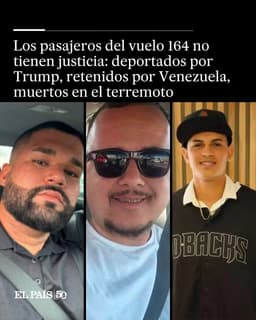
Alejandro Emilio Visbal Mendoza, an asylum-seeker from Ann Arbor, Michigan, was deported to Venezuela and died when the building where deportees were being housed collapsed following devastating earthquakes. His family spent days searching through hospital lists, morgues, and social media after losing contact with him following his deportation flight.


Daniel Alejandro Núñez Ramírez, a 28-year-old Venezuelan, was deported from the United States and arrived in Venezuela on June 24, 2026, as part of a group of 146 deported migrants. On the same day, two powerful earthquakes struck Venezuela. Daniel was being held at the Santuario La Llanada hotel in La Guaira while repatriation procedures were completed. When the hotel collapsed during the earthquakes, Daniel was killed instantly. His mother, Oswadeliz Núñez Ramírez, spent five days searching for him in hospitals, morgues, and across La Guaira and Caracas before his body was recovered from the rubble. She identified him by a tattoo. Only 32 of the 146 deported migrants survived the disaster.


Ángelo Mejía Meléndez, a 27-year-old Venezuelan, was deported from the U.S. on June 24, 2026, as part of a group of approximately 145-146 Venezuelans. He had been building a life in Miami, working at a pier, where his employer valued his work so highly that they named a new Jet Ski after him. In a recent voice note to his mother, he expressed deep love for her, saying "If I were to be born again, I would want you to be my mother." Hours after landing in Caracas, while being processed in a guarded hotel in La Guaira, powerful twin earthquakes struck and the building collapsed, killing him. His family identified his body by a distinctive pizza tattoo on his arm. His best friend Georgelyss Montes, whom he had said goodbye to four years earlier when he left for the U.S., learned of his death after searching hospitals and morgues. His mother did not learn of his death until days after the earthquakes, when a survivor informed her he had not survived.


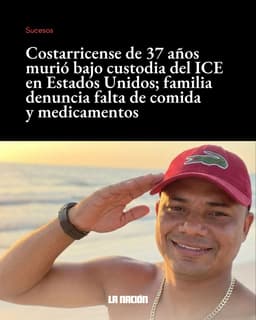
A 39-year-old man from Mexico died from cardiac arrest likely caused by septic shock after his requests for medical help regarding an infected abscess were mishandled while in Immigration and Customs Enforcement custody. The case was documented in a joint report by Human Rights Watch and Physicians for Human Rights examining deaths in ICE facilities, which found that at least 52 deaths have been reported in ICE custody since January 2025, with the mortality rate up 140 percent compared to the previous year.
Eduardo José Osal Mujica, 32, crossed the Darién Gap into the U.S., turned himself in to immigration authorities, and applied for asylum while working installing roofs and driving for Uber, settling first in Denver and later Wyoming. Local police detained him during a traffic stop in Wyoming, after which he was transferred through detention facilities in Colorado, Arizona and Texas before signing a deportation order. He was among 146 Venezuelans deported on Flight 164, which landed in Maiquetía, Venezuela on June 24, after which he and other deportees were taken to the Negra Hipólita Health Hotel for medical checkups before planned release to their home cities. The hotel collapsed in an earthquake that day, killing an unknown number of deportees while in Venezuelan custody. His wife, Danielys Hurtado, spent five days searching for his body among bags of corpses at an improvised morgue in a converted grain-storage facility. Nearly two months later, the Venezuelan government has released no official information on those who died, with survivor estimates ranging between 12 and 32.


Elomar Alexander Reyes, a 20-year-old baseball player, had been in the United States for only three months on a tourist visa, hoping to pursue a baseball career after training the previous year with an Arizona team that had signed him, according to his father Ivys Reyes. He was detained and deported to Venezuela on Flight 164, arriving June 24, and was held at the Negra Hipólita Health Hotel in La Guaira, where he died when the building collapsed in an earthquake. His father recovered his body from a hospital morgue in Caracas but was not given his documents or personal belongings.


Daniel Alejandro Núñez Ramírez, 28, had lived in the U.S. for four years after leaving Venezuela at age 20 and was residing in Jacksonville, Florida. He was detained by ICE during a traffic stop on May 10, 2026, and pressured to sign voluntary deportation papers. He was deported on Flight 164, which landed in Venezuela on June 24, 2026, and he was subsequently placed by Venezuelan authorities in a hotel used to house deportees. Hours after his arrival, an earthquake collapsed the hotel, killing him along with dozens of other deportees. His mother, Oswadeliz Núñez Ramírez, a lawyer, said she was not notified of his deportation until after he had already been handed over to Venezuelan intelligence services (Sebin). She recovered his body five days later at an improvised morgue, had him cremated, and later received only a box of his ashes after being unable to retrieve his belongings. The U.S. government said it bore no further responsibility once he left ICE custody.


Adrian Andreas Florian, an 85-year-old German national, died at Valley Baptist Medical Center in Harlingen, Texas on June 24, 2026, after spending nearly eight months hospitalized while in ICE custody. Florian presented himself at the Colombia Solidarity Bridge port of entry in Laredo on August 28, 2025, without valid documentation and was taken into ICE custody the following day. He was transferred to the hospital on November 4, 2025 due to dementia, high blood pressure, cognitive impairment, and ulcers. He is the 21st person to die in ICE custody in 2026 and the first German national to die in custody that year, with the cause of death pending autopsy results.


Geraldo Lunas Campos, a 55-year-old Cuban man and father of four, died on January 3, 2026, at Camp East Montana detention facility at Fort Bliss in El Paso during physical restraint by law enforcement. Witnesses in nearby cells heard guards shove Lunas Campos into his cell after he requested his medication during nurse rounds, followed by punching and slamming sounds. Lunas Campos screamed 'I can't breathe!' and 'You're suffocating me,' with his last words being 'I cannot breathe, may God bless me.' The El Paso County Medical Examiner ruled his death a homicide on January 21, 2026, determining the cause was asphyxia from neck and torso compression, with evidence of neck hemorrhages, petechial hemorrhages in the eyelids, and abrasions on his chest and knees. ICE's account of events changed multiple times, initially claiming medical distress before stating staff used force while restraining him. A federal GAO report found that the facility's contractor failed to provide required use of force and death reports to ICE, and evidence associated with the incident was missing or destroyed.


Mamuka Artmeladze, a 43-year-old man from Georgia, died on June 4, 2026, after being found unresponsive in his cell at Winn Correctional Center in Winnfield, Louisiana. He was rushed to Winn Parish Medical Center, where staff were unable to resuscitate him and he was pronounced dead about an hour later. Artmeladze had been in ICE custody since February 2026, detained during an enforcement operation inspecting commercial vehicle drivers, and had not yet had a court date. His death followed that of Alejandro Cabrera Clemente at the same facility on April 11, and came after a Department of Homeland Security inspection documented insanitary conditions, inadequate medical care, and use-of-force violations at Winn, including an officer using a banned chokehold and another stabbing a detainee's thumb with a pen. He was reported to be the 50th person to die in ICE custody during the Trump administration's second term. An autopsy was pending to determine the official cause of death.


Alex Pretti, a 37-year-old intensive care nurse at the Minneapolis Veterans Affairs Medical Center and a U.S. citizen, was fatally shot by federal agents on January 24, 2026, during a protest against Operation Metro Surge immigration enforcement in Minneapolis. Pretti was peacefully observing and filming agents when they shoved him, sprayed him with a chemical agent, and beat him with a metal canister before shooting him ten times. Multiple witnesses and bystander video contradicted federal authorities' initial claims of self-defense; footage showed Pretti on the ground holding a mobile phone, and showed an agent removing a gun from his hip holster before the shooting began. Although Pretti was a legal firearm owner with a carry permit, he did not brandish a weapon or attack agents. Minnesota Governor Tim Walz and other state and local officials rejected the federal government's characterization of the shooting. Pretti's death was one of at least 14 shooting incidents involving agents during the enforcement surge and prompted resignations and removals of ICE commander Gregory Bovino and DHS Secretary Kristi Noem, along with congressional scrutiny over use of force, training, and body camera protocols.


Renee Nicole Good, a 37-year-old U.S. citizen, mother of three, poet, and legal observer, was shot and killed by ICE agent Jonathan Ross on January 7, 2026, during an immigration enforcement operation on Portland Avenue near 34th Street in south Minneapolis. Good was monitoring the enforcement action and blocking the street with her car to alert neighbors of ICE's presence when unmarked vehicles arrived. As Good began to drive away from the officers, Ross fired three shots at eye level through the windshield and driver's side window. Federal officials claimed the agent fired in self-defense when Good's vehicle attempted to run over agents, but a New York Times analysis and Human Rights Watch found Good posed no imminent threat to life and the officer was not in the direct path of her car when he fired. An independent autopsy confirmed she was shot at least three times, with gunshot wounds to her head, arm, and breast. Her wife Becca said they were alerting neighbors of ICE's presence. The shooting sparked dozens of protests across the country, and her family filed a tort claim against the federal government seeking damages. The border czar announced that hundreds of federal agents would be pulled from Minnesota amid public outcry.


Denis Isaías Anariba Herrera, a 24-year-old Honduran, was deported on Christmas Eve 2025 and died of heat exposure while attempting to return to his one-year-old daughter and wife in the United States. He had lived in Houston for five years before his deportation. After spending approximately two months in Mexico, Anariba boarded a Union Pacific freight train in Piedras Negras, Coahuila, headed toward Texas in May 2026. He died inside a railroad container along with six other migrants from extreme temperatures while trapped in the car. His mother, Denia Herrera, recalled his last message to her: "Never forget my little girl, always go see her, visit her." His father, Isaías Anariba, a 47-year-old farmer and construction worker, had emigrated to the U.S. when Denis was a child. His aunt Lilian described him as hardworking and quiet. His family is raising funds for his funeral, planned for May 21 in Houston.


Wendy Hernandez Reyes, a 29-year-old undocumented immigrant and domestic violence survivor with no criminal record, was detained by Baldwin County sheriff's deputies in Alabama on January 8, 2026, during a traffic stop. After ICE was contacted, Hernandez repeatedly requested her release to care for her 2-year-old U.S. citizen son, Orlin, but was denied. She was deported to Honduras on January 26, 2026, without her son and was forced to leave him in the care of her brother-in-law, Samuel Maldonado Erazo. On March 4, 2026, Orlin died from multiple blunt force traumas inflicted by Maldonado, who was charged with first-degree murder. A federal court reopened a case against the Department of Homeland Security alleging ICE officials failed to follow safety protocols during separation and lacked a reunification plan, while ICE blamed Hernandez for leaving her son with the relative.


Tuan Van Bui, a 55-year-old Vietnamese national who legally entered the U.S. in 1990 under the Amerasian Homecoming Act, died on April 1, 2026, at Miami Correctional Facility in Bunker Hill, Indiana while in ICE custody. Staff found him unresponsive, initiated CPR, and called emergency services; he was pronounced dead at 6:10 p.m. His autopsy ruled the death natural, caused by hypertensive arteriosclerotic cardiovascular disease. Bui had been ordered removed from the country by an immigration judge in 2005 and was challenging his detention through a habeas corpus petition at the time of his death. His death was the second at the facility since October 2025, prompting the ACLU of Indiana to call for transparency and advocates to organize a statewide day of action on May 16, 2026, with over 70 protesters rallying at the Allen County Courthouse in Fort Wayne.


Seven people believed to be immigrants from Mexico and Honduras died from heat stroke while being smuggled in a sealed Union Pacific boxcar in South Texas. Six bodies were discovered inside the boxcar at a rail yard in Laredo on May 10, 2026, when temperatures reached 97–105 degrees. The victims ranged in age from 14 to 56, with three from Mexico and three from Honduras. A woman inside the container called her sister reporting dangerous heat and physical distress, prompting a police response. A seventh body was found near railroad tracks in Bexar County, approximately 150 miles north of Laredo, on May 11 and is believed connected to the incident. Authorities attributed the deaths to heat-related illness and contacted the Department of Homeland Security, with federal officials leading the investigation into the human smuggling operation.


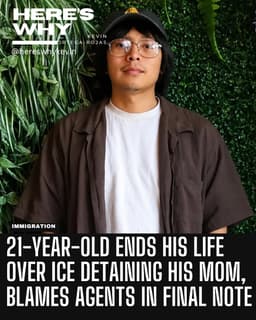
Kevin González, an 18-year-old U.S. citizen with stage 4 colon cancer, pleaded with immigration authorities to release his parents so he could see them before his death. His parents, Mexican nationals Isidoro González Avilés and Norma Anabel Ramírez Amaya, were arrested near Douglas, Arizona on April 14, 2026, after attempting to reenter the U.S. following denied humanitarian and B1/B2 visa requests. They had been previously deported in 2011 and 2024, and were reported chained during court appearances while detained for weeks. A federal judge in Tucson ordered their release on May 8, 2026. They were deported to Mexico that day and traveled to Durango, where they reunited with Kevin on May 8. Kevin died on May 9, 2026, one day after the reunion.


Denny Adan Gonzalez, a 33-year-old Cuban national, was found unresponsive in his cell at Stewart Detention Center in Lumpkin, Georgia, on April 28, 2026, at approximately 10:25 p.m. and pronounced dead at 11:11 p.m. ICE reported the suspected cause as suicide, though the official cause remained under investigation. Gonzalez had been in solitary confinement following an alleged altercation with a staff member the day before. He had arrived at a U.S. port of entry in 2019, was deported in 2020, re-entered without authorization in 2022, and was transferred to Stewart in January 2026 after arrest in North Carolina on assault and domestic violence charges. Immigration advocates, his mother Lourdes González Suárez, and U.S. Senators Jon Ossoff and Raphael Warnock called for independent investigation and improved transparency regarding ICE custody deaths.


Ray Barraez, a 50-year-old Venezuelan Uber driver, died of a heart attack during a traffic stop in Seminole County, Florida after being stopped for a broken license plate light. According to his wife's account, Barraez had hypertension and was in an open asylum process; fear of detention by immigration authorities contributed to the cardiac event that caused his death.


Alejandro Cabrera Clemente, 49, from Valle de Santiago, Guanajuato, Mexico, had spent approximately 25 years in the United States and was married to a U.S. citizen, though he had not obtained legal residency status. He was arrested by ICE on January 8, 2026, in Chattanooga, Tennessee, and transferred through multiple facilities in Tennessee and Alabama over five days in handcuffs before arriving at Winn Correctional Center in Louisiana on January 13. During his three months in ICE custody, he suffered from fever, high blood pressure, and back and throat pain. ICE stated they provided him medication. On April 11, 2026, at approximately 8 a.m., he was found unresponsive with left-sided facial paralysis and cyanosis. Staff called emergency medical services and attempted resuscitation, transferring him by ambulance to Winn Parish Medical Center, where medical personnel continued life-saving measures. He was pronounced deceased at approximately 8:51 a.m. His sister was located in Atlanta by Guanajuato's Human Rights Secretariat, which offered funeral assistance and possible repatriation. His death was one of multiple ICE custody deaths reported in early 2026.


Aled Damien Carbonell-Betancourt, a 27-year-old Cuban national, was found dead on April 12, 2026, hanging from a bedsheet in his cell at Miami Federal Detention Center. He had entered the United States legally in October 2024 under parole after being cited by CBP as an undocumented immigrant. In November 2025, he was arrested in Miami-Dade County on charges of resisting an officer with violence; prosecutors later abandoned these charges. He was transferred to ICE custody on February 11, 2026, and held under a deportation order. He had been diagnosed with anxiety and prescribed medication in March 2026 but reportedly denied suicidal ideation. His death was investigated by ICE as an apparent suicide and was reported as one of at least nine to ten suicides among men in ICE custody since Trump returned to office in January 2025, and the second reported suicide in Florida ICE custody within a month.


Alejandro Cabrera Clemente, a 49-year-old Mexican national, died on April 11, 2026, at Winn Correctional Center in Louisiana while in ICE custody. He was arrested by ICE on January 8, 2026, in Chattanooga, Tennessee, and transferred to the Louisiana facility on January 13, 2026. Cabrera was found unresponsive during a security check and transported to Winn Parish Medical Center, where he was pronounced deceased at approximately 8:51 a.m. He had received treatment for high blood pressure and other medical conditions during his months of detention. The coroner determined his death resulted from natural causes due to cardiovascular disease.


A 50-year-old Mexican man named Jesús died in late February after avoiding hospital care out of fear of ICE detention and deportation. His wife attributes his death to harsh U.S. immigration policies. He remained bedridden at home despite declining health and was only taken to a hospital when it was too late. He left behind four children, including one minor.


Jesús Carpio, a Venezuelan living in Orlando, was deported from the United States following arrest during a traffic stop for driving with a suspended license. He was killed in Venezuela four days after his deportation. His sister stated his case reflects fears among Venezuelan exiles about returning to their country.


Ali and Adel, an Iranian gay couple in their late 30s and early 40s, fled Iran in 2021 after being arrested by Iran's morality police for their relationship. They entered the United States at the El Paso, Texas border in early 2025 seeking asylum, but their claims were denied. The men are now separated in ICE detention facilities—Ali in Arizona and Adel near El Paso—facing deportation under a Trump administration policy reversing decades of allowing Iranians fleeing persecution to remain in the country. Adel has suffered severe organ damage and medical deterioration in detention, including significant weight loss and fainting episodes. Court orders have so far prevented their deportation, though both men have been moved to deportation staging facilities multiple times, and the Trump administration has not clarified whether deportation flights to Iran will resume.


Nurul Amin Shah Alam, a 56-year-old nearly blind Rohingya refugee from Myanmar, was released from Erie County jail on February 19, 2026, after U.S. Border Patrol agents determined he was ineligible for deportation. Border Patrol agents dropped him at a Tim Hortons coffee shop north of Buffalo without notifying his family or attorney. Surveillance footage contradicted DHS claims that the location was safe and open; the store was closed except for the drive-thru. Alam, who spoke little English and required a cane to walk, went missing for several days. His body was found on February 24 near KeyBank Center, approximately four miles from the coffee shop. Local officials later ruled his death a homicide, caused by complications of a perforated duodenal ulcer precipitated by hypothermia and dehydration.


Jose Guadalupe Ramos-Solano, a 52-year-old Mexican national married to Antonia Tovar for 28 years with two adult children, died of COVID-19 pneumonia at Adelanto ICE Processing Center on March 25, 2026. He was arrested by ICE on February 23 after appearing at a courthouse in Torrance for a traffic ticket, following a conviction for possession of a controlled substance and theft. During intake screening, staff documented pre-existing medical conditions including diabetes, hyperlipidemia, and hypertension. His wife reported that despite these documented conditions, he did not receive adequate medical care during his month-long detention, complaining of poor food, crowded conditions, and lack of medicine for minor ailments. On the evening of his death, he removed his shirt while feeling feverish, lost consciousness, and was pronounced dead at Victor Valley Global Medical Center approximately one hour after emergency services were called. His death was one of at least 14 ICE custody deaths reported between January and late March 2026. A federal judge subsequently ordered sweeping improvements to Adelanto, including potable water, adequate sanitation, improved medical care, and appointment of independent monitors.


José Guadalupe Ramos Solano, 36, a Mexican national, died on March 25, 2026, after being found unconscious in his bunk at Adelanto ICE Processing Center in California. He was rushed to Victor Valley Global Medical Center in Victorville, where he was pronounced dead at approximately 9:30 p.m. Ramos was arrested in May 2025 for possession of a controlled substance and theft of personal property in Redondo Beach, and was detained by ICE on February 23, 2026, during an operation in Torrance before being transferred to Adelanto. During intake screening on February 24, staff identified he had diabetes, hypertension, and hyperlipidemia and he received daily medication for these conditions. According to detainees, guards did not respond promptly when Ramos became ill; witnesses said he had been having trouble breathing and removed his shirt because he felt he was suffocating. Staff attempted CPR when he was found unresponsive. ICE reported that the cause of death remained undetermined.
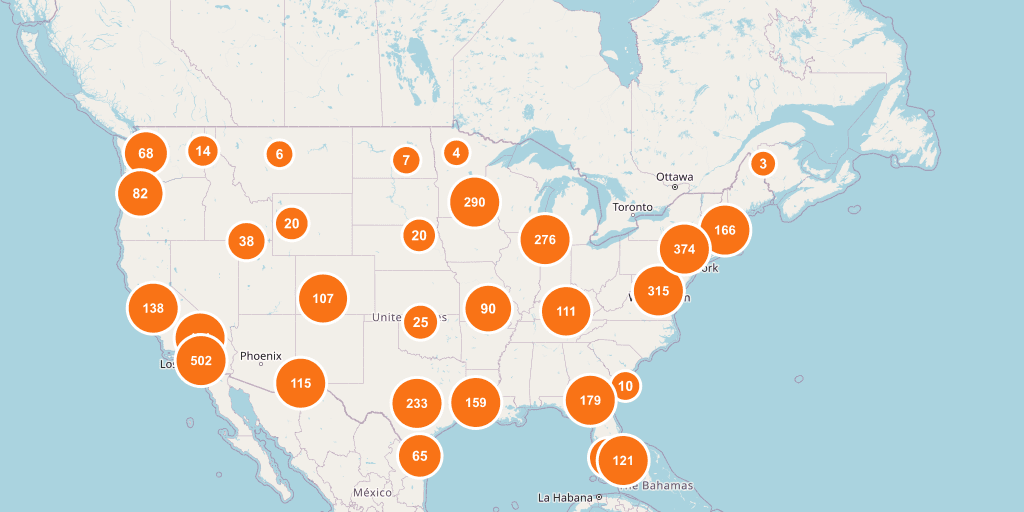
Showing 50 of 187 incidents